
Sarbloh, Millets & Naam Simran: Ancient Sikh Wisdom for a Healthier Body and a Calmer Mind
A conversation with Bhai Sher Singh explores how traditional cookware, wholesome foods and remembrance of Waheguru may support a more balanced way of living—while reminding us to approach personal health experiences with humility and proper medical guidance.
Excerpt: A conversation with Bhai Sher Singh explores how traditional cookware, wholesome foods and remembrance of Waheguru may support a more balanced way of living: while reminding us to approach personal health experiences with humility and proper medical guidance.

Summary
In a Punjabi interview, Bhai Sher Singh, a Nihang Singh, reflects on the relationship between food, the mind and spiritual discipline. His central message is expressed through the phrase “Jaise ann, vaise man”: as the food, so the mind.
The interview connects three areas of daily life:
- Sarbloh, or traditional iron vessels
- Wholesome foods, including millets such as bajra, ragi and kodra
- Naam Simran, the practice of remembering and repeating the Divine Name
Bhai Sher Singh also shares a personal account of living with severe migraines and later experiencing relief after drinking water from a Sarbloh bowl and changing his lifestyle. His story may feel meaningful to those who hear it, but it remains a personal testimony: not medical evidence or a substitute for professional care.
The deeper lesson is not that one vessel or one food can solve every difficulty. It is that our spiritual growth can include the way we eat, prepare food, care for our bodies, manage stress and return our attention to Waheguru.
Watching the Interview
The discussion can be viewed on YouTube here: Sarbloh, Millets and Naam Simran interview.
The interview moves between traditional Sikh practices, personal health experiences, food choices, cookware and spiritual discipline. Some statements are presented with great conviction, while others are based on individual observation. For this reason, the most helpful approach is to listen with respect and discernment.
A personal experience can encourage reflection. It should not automatically be treated as universal proof.
What Is Sarbloh?

Sarbloh is traditionally understood as a pure or simple iron vessel used in some Sikh households and communities. In the interview, Bhai Sher Singh describes the Sarbloh bata, or bowl, as part of a disciplined way of eating and drinking. He explains that iron may transfer into food or water, particularly when the vessel is used regularly.
Scientific research does show that iron cookware can increase the iron content of food. The amount depends on several factors, including the condition of the vessel, the length of cooking and the acidity of the food. The transfer is not always the same, and it should not be assumed that more iron is always better.
For many people, using a well-made, food-safe iron vessel may be a reasonable part of cooking. However, the quality and composition of the cookware matter. Products described as “iron” may contain other metals or undisclosed alloys, so it is important to choose vessels from a reliable source and follow appropriate care instructions.
The interview contrasts Sarbloh with steel, aluminium, plastic and disposable containers. While traditional cookware may have cultural, practical and spiritual value, it is better to avoid absolute claims that one material is always safe and another is always harmful. Each material has different properties, and food safety also depends on manufacturing quality, cleaning and use.
People with haemochromatosis, iron overload, certain liver conditions or other medical concerns should speak with a healthcare professional before regularly using uncoated iron cookware. Additional iron may not be suitable for everyone. For more information, see the National Institutes of Health information on iron.
The Meaning Behind “As the Food, So the Mind”
The phrase “Jaise ann, vaise man” can be understood both physically and spiritually.
Food affects energy, digestion and overall wellbeing. A diet built mainly around highly processed foods may leave us feeling unsettled or tired, while balanced meals can support steadier energy. But the teaching also points to the state of mind in which food is prepared and eaten.
A meal prepared hurriedly, consumed while distracted and followed by constant indulgence may reinforce restlessness. The same simple meal, prepared with care and eaten slowly, can become an opportunity for gratitude and awareness.
This does not mean that food alone determines our character. Our thoughts are shaped by many influences, including sleep, relationships, work, stress, habits and spiritual practice. Food is one part of a larger pattern.
The goal is not perfection. The goal is greater awareness.
Why Millets Deserve a Place in Our Diet
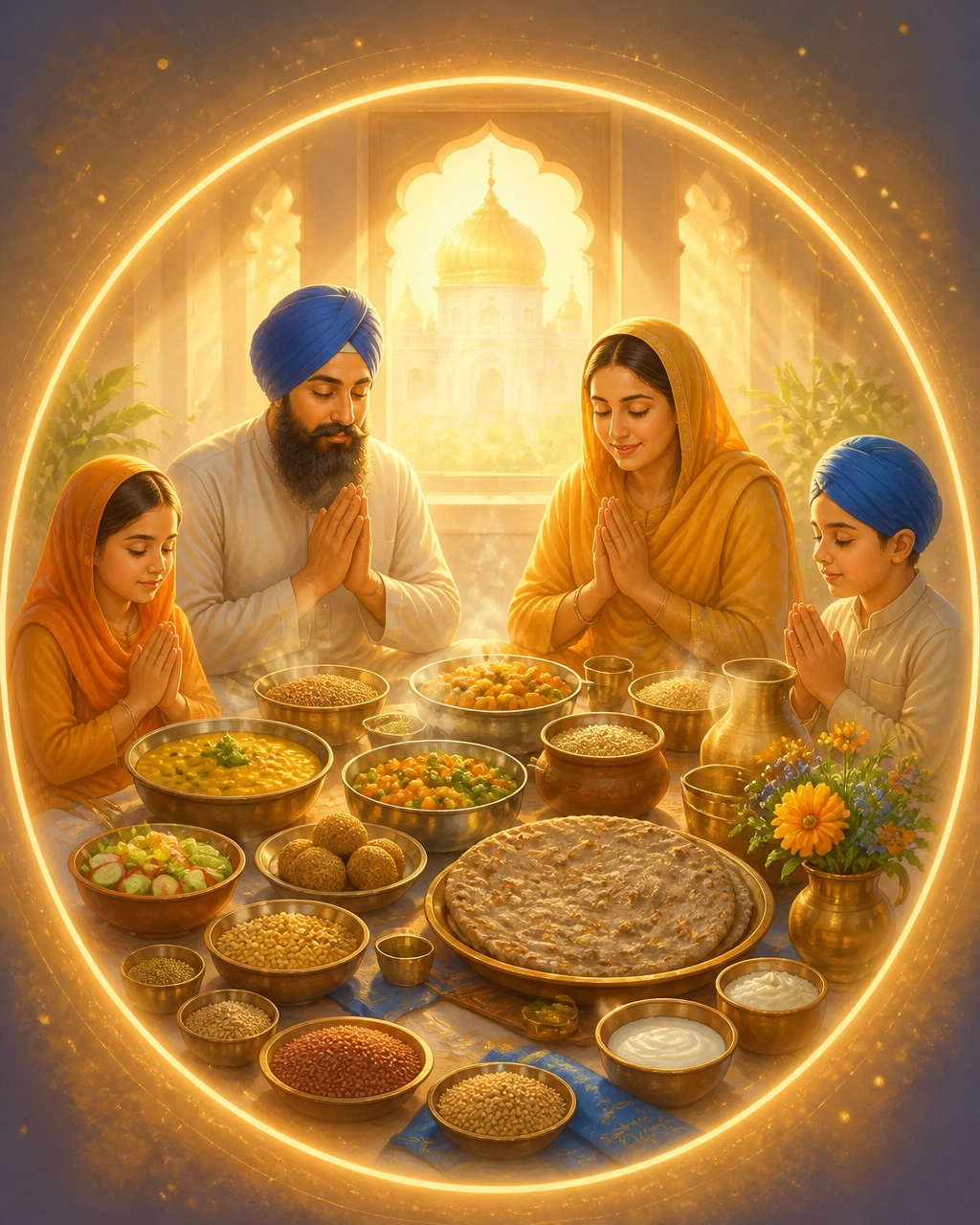
Bhai Sher Singh highlights traditional grains such as bajra, ragi, kodra, kangni and other millets. These foods have long been part of South Asian food traditions and can add variety to our meals.
Millets may provide fibre, minerals and complex carbohydrates. They can be prepared as rotis, porridge, khichdi, upma or other familiar dishes. Their texture may also encourage slower eating, which supports mindful nourishment.
For more on this topic, read 5 Powerful Millets to Add to Your Diet.
Millets are not a cure for disease, and they do not need to replace every other grain. They can simply become part of a varied diet that includes vegetables, pulses, fruit, nuts and adequate protein.
The interview also discusses jaggery, kala noon and herbal drinks such as a spiced “Khalsa chah.” These traditions may be meaningful, but natural does not always mean unlimited or suitable for every person. Jaggery is still a source of sugar, and herbs may interact with medicines or health conditions. Moderation remains important.
Naam Simran as Daily Grounding

The interview presents Sarbloh not only as cookware, but as a reminder to practise Naam Simran. Bhai Sher Singh describes repeating “Waheguru” while drinking water or eating from the bowl. In this way, an ordinary action becomes connected with remembrance.
This is one of the strengths of a spiritually grounded wellness practice. Meditation does not need to be separated from family life, work or household responsibilities. Washing a vessel, preparing a meal, walking to work or sitting quietly before sleep can all become opportunities to return our attention to the present moment.
Naam Simran is not about chasing unusual experiences. It is about remembrance, humility and gradually becoming more aware of our thoughts and actions. A regular practice may support stress relief meditation by helping us pause before reacting. It may also support inner peace by giving the mind a steady centre during difficult periods.
The journey ultimately involves returning to simplicity. For further reflection, read Beyond Spiritual Experiences: Returning to the One.
Bringing the Teaching Into Ordinary Life
We do not need to change everything at once. A balanced approach may include:
- Preparing one more meal at home each week. Use whole grains, vegetables and pulses where practical.
- Trying one millet at a time. Begin with a familiar recipe rather than treating traditional foods as a rigid obligation.
- Using cookware mindfully. If choosing Sarbloh, purchase from a trusted source, learn how to maintain it and follow food-safe cleaning practices. Traditional ash or sand methods may be part of a cultural practice, but they should not replace proper hygiene.
- Creating a short Naam Simran routine. Five quiet minutes in the morning or evening can be a meaningful beginning.
- Eating with attention. Put aside the phone, slow down and notice the food, the effort behind it and the people sharing it.
- Keeping medical care in its proper place. Spiritual practice can support resilience and wellbeing, but it should not replace diagnosis, medication or professional treatment.
The interview also presents a vegetarian and bibek-oriented view of Sikh living, including a rejection of meat for spiritual and ethical reasons. This reflects the speaker’s understanding and practice. Readers may wish to study Sikh sources and consult trusted Gurmati educators when exploring questions of maryada, diet and personal discipline.
The important point is not to judge another person’s journey. It is to examine our own choices with honesty and humility.
A Calm Health and Safety Note
Bhai Sher Singh describes drinking approximately 40 bowls of water: around 80 glasses: over 12 hours and connects this experience with relief from migraines. This should not be copied. Excessive water consumption can cause serious electrolyte imbalance and may be dangerous.
There is currently no reliable evidence that Sarbloh water cures migraines, cancer, thyroid disease, depression or other medical conditions. Iron cookware may contribute some iron to food, but the amount varies, and iron is not an established migraine treatment.
Anyone with persistent headaches, migraines, fatigue, sleep problems or another health condition should consult a qualified healthcare professional. People with iron overload, kidney disease, liver disease or medication concerns should seek individual advice before using uncoated iron cookware regularly.
Personal testimony can be respected without being treated as medical fact.
Returning to the Centre
Sarbloh, millets and Naam Simran can be viewed as parts of one thoughtful way of living: caring for the body, choosing food with greater awareness and remembering Waheguru throughout the day.
The vessel itself is not the whole practice. The grain is not the whole practice. Even meditation is not complete if it remains disconnected from how we speak, work, serve and care for others.
The goal is not to return to the past in every detail, but to recover what may still serve us: simplicity, discipline, gratitude, moderation and remembrance.
A healthier body and a calmer mind are developed gradually: one meal, one breath and one act of awareness at a time.